SEND Provision
 Special Educational Needs and Disability
At Blowers Green Primary School, our vision is to create an inclusive, nurturing and ambitious environment where every child—regardless of their starting point, needs or experiences—can flourish. We are committed to ensuring that pupils with SEND are known, valued and empowered to succeed academically, socially and emotionally.
We strive to remove barriers to learning so that all pupils can access a vibrant curriculum, communicate effectively in ways meaningful to them, and develop the confidence, independence and resilience needed to thrive in life. We believe every child deserves an education that celebrates their strengths, champions their individuality and opens doors to future opportunity.
Our vision is that all pupils with SEND at Blowers Green:
- Experience high‑quality, inclusive teaching every day, supported by thoughtful adaptations that enable them to thrive.
- Are respected as individuals, with their voice, communication methods and lived experiences shaping the support they receive.
- Make strong progress from their starting points and achieve meaningful outcomes that prepare them for the next stage of learning.
- Feel safe, included and a valued part of our school community, able to participate fully in every aspect of school life.
- Develop strong character—kindness, resilience, independence and self‑belief—knowing that their ambitions are recognised and supported.
- Are surrounded by adults who believe whole‑heartedly in their potential and work closely with families and professionals to ensure they succeed.
Our ethos is rooted in the belief that every child matters, every moment counts and every voice should be heard. Inclusion is not something we “do”—it is who we are.
At Blowers Green, we:
- Champion equity, ensuring every child gets the support, adaptations and opportunities they need to thrive.
- Value all forms of communication, spoken and non‑spoken, recognising that every child has the right to express themselves and be understood.
- See strengths first, celebrating what each child can do and building on their interests, talents and motivations.
- Work collaboratively, forming strong partnerships with families, external professionals and the wider community to provide the best possible support.
- Reflect and improve continually, using evidence, expertise and compassion to refine our practice and respond to each learner’s evolving needs.
- Create belonging, ensuring every pupil feels included, respected and welcomed in every classroom, activity and experience.
 Meet our SENDCO Mrs Martin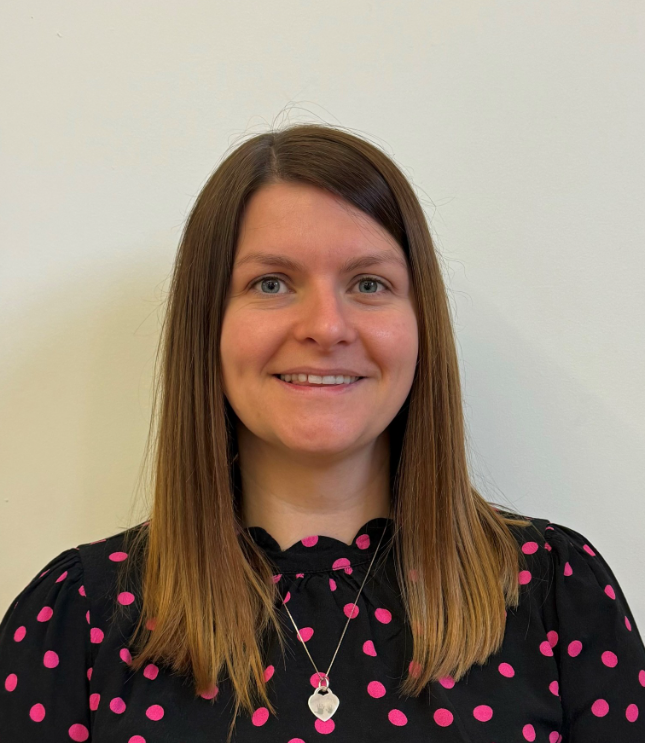
Hello, I’m Mrs Martin, the Deputy Headteacher and SENCO at Blowers Green Primary School. I have been privileged to serve our school community for many years, teaching across different year groups and supporting children and their families throughout their educational journeys.
Alongside my teaching qualifications and extensive experience, I hold the National Award for SEN Coordination. In my role, I work to identify and coordinate provision for pupils with Special Educational Needs and Disabilities (SEND), ensuring that every child receives the personalised support they need to thrive academically, socially, and emotionally.
A vital part of my work is building strong, collaborative relationships — with parents and carers, teachers, external agencies, educational psychologists, and other professionals — so that together we can secure the best possible outcomes for every child.
At Blowers Green, inclusion sits at the heart of everything we do. I am deeply committed to ensuring that every pupil feels valued, supported, and empowered to achieve their very best.
Intent
Aims of our provision for pupils with SEND
At Blowers Green Primary, our curriculum intent for learners with SEND is rooted in the principle that every child is entitled to a high‑quality, ambitious and inclusive education. Our goal is to ensure that every pupil—regardless of need—experiences equity, belonging, and meaningful access to the full curriculum, with teaching that removes barriers to engagement and progression.
Our inclusive philosophy is simple:
“Essential for some, useful for all.”
Our intent is to deliver a coherent, ambitious and sequenced curriculum that responds to each learner’s starting point, ensuring that adaptations are meaningful, purposeful and embedded across all subjects. We prioritise early identification of need and use carefully planned pathways so that SEND learners experience equity, belonging and full participation in school life.
We aim to create an environment where inclusion is a lived experience, not a policy. Our curriculum removes barriers by providing accessible learning journeys, evidence‑informed scaffolding, and personalised support strategies that enable pupils with SEND to make strong progress over time. Leaders and teachers work collaboratively to ensure the curriculum is high‑quality, well‑sequenced, and reflective of the diverse needs within our community.
This should enable our learners to:
- achieve their best
- become confident individuals living fulfilling lives, and
- make a successful transition into adulthood, whether into employment, further or higher education or training’
Special educational needs and disability code of practice: 0 to 25 years. DFE January 2015
Aligned with the EEF’s flagship report Special Educational Needs in Mainstream Schools, we ensure that high‑quality teaching is the first and most powerful support mechanism for SEND learners.
Implementation
Our curriculum implementation for learners with SEND is grounded in evidence‑informed practice, consistency, and high‑quality teaching as the universal offer—aligned with the EEF’s five core SEND recommendations.
1. High‑Quality Teaching as the First Wave of Support
Teachers deliver instruction that is:
- Explicit, well‑modelled, and scaffolded,
- Designed to reduce cognitive load and present knowledge in small, connected steps,
- Responsive to ongoing assessment.
2. Adaptive Teaching and Meaningful Adjustments
We design adaptations that maintain curriculum ambition while reducing barriers, ensuring our curriculum remains ambitious, sequenced and accessible for all learners.
Examples include:
- Pre‑teaching vocabulary
- Visual scaffolds and structured writing frames
- Chunking tasks
- Flexible seating arrangements
- Assistive technology where appropriate
3. Holistic Understanding of Each Learner
Staff build a full picture of each child’s needs, preferences and strengths through:
-
Pupil profiles
- Assessment of starting points
- Regular SENCO‑teacher collaboration
4. Structured Interventions that Complement Teaching
Small‑group and 1:1 interventions are:
- Evidence‑based,
- Time‑limited,
- Closely monitored,
- Designed to complement classroom learning—not replace it.
5. Effective Deployment of Teaching Assistants
TAs are trained to:
- Deliver structured intervention programmes,
- Use scaffolding rather than over‑prompting,
- Promote independence.
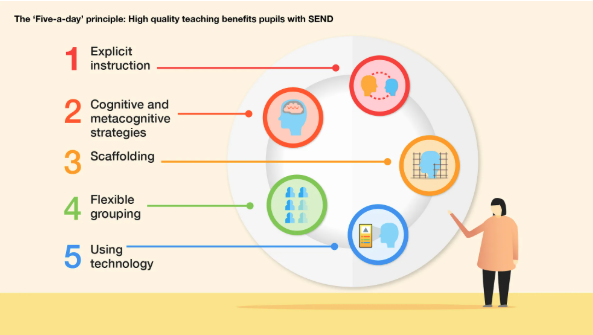
At Blowers Green Primary School, we are committed to ensuring that every child, including those with SEND, can access high‑quality teaching within their classroom. To support this, we embed the Education Endowment Foundation’s (EEF) Five‑A‑Day approach throughout our lessons.
The EEF identifies five key principles that enhance learning for pupils with SEND:
- Explicit instruction
- Cognitive and metacognitive strategies
- Scaffolding
- Flexible grouping
- Using technology effectively
These strategies help us create an inclusive learning environment where all children can thrive.
For further details about the Five‑A‑Day approach, please visit the EEF website.
Many steps are taken to support our learners to achieve their best through their learning journey at Blowers Green. Quality of teaching is vital; however, for some children there are occasions when further additional support may be needed to help them achieve their targets and reach their full potential.
Our staff are trained to support learners with a wide range of needs. This may include one-on-one sessions, working with peer mentors, or engaging in small group activities, alongside high-quality whole-class teaching. Learners who require Special Educational Needs (SEN) support will be added to the SEN register, following consultation and consent from their parents.
We implement a graduated approach to SEN as outlined in the SEND Code of Practice, adhering to the Assess, Plan, Do, Review cycle. This approach starts with early monitoring and identification of SEND and continues through to children with Education, Health and Care (EHC) plans. It ensures that everyone involved in supporting children with additional needs can set individual targets, track progress, evaluate outcomes, and plan for future steps.
The aims of our policy and practice in relation to special educational needs and disabilities (SEND) are:
- To make reasonable adjustments for pupils with a disability by taking action to increase access to the curriculum, the school environment, and printed information for all learners.
- To ensure that children and young people with SEND are fully included in the life of the school and able to participate in activities alongside their peers.
- To reduce barriers to progress, enabling every pupil to achieve their potential.
- To use our best endeavours to secure appropriate special educational provision for pupils who require support that is “additional to and different from” that ordinarily available within a high‑quality, adapted curriculum.
- This enables us to respond effectively to the four broad areas of need:
 Communication and interaction.
 Cognition and learning.
 Social, mental and emotional health.
 Sensory and physical.
Impact
Impact is evaluated through:
- Progress against sequenced curriculum goals
- Development of independence and self‑advocacy
- Ability to recall and apply knowledge over time
We measure progress in relation to each pupil’s baseline, acknowledging that meaningful progress is personalised but still ambitious.
When further support is needed.
Reading, Maths and Writing assessments are completed termly, and standardised scores are monitored for progress. For those SEND pupils who are not yet working at the level required to score within the standardised assessment, further assessment is completed by the SENCO or class teacher using York Assessment of Reading Comprehension (YARC). I
ndividual Learning Plans (ILPs) and/or Individual Behaviour Plans (IBPs) are reviewed termly in order to measure progress towards individual targets. Pupil Progress Meetings are held each term. At these meetings, the class teacher will meet senior leaders including the SENCO to discuss the progress of individuals in their class. This shared discussion may highlight areas that require further support which can then be planned for. Most pupils with SEND have their needs met and make progress.
However, some pupils may not make the progress expected of them. When this happens, the SENCO will request that the Local Authority carry out an Education Health and Care needs assessment, which is a detailed assessment of a pupil’s special educational needs in accordance with the Children and Families Act 2014. Following the assessment, the Local Authority may issue an Education, Health and Care Plan (EHC plan). An EHC plan is a legal document which describes a child or young person’s Special Education, Health and Social Care needs, the help that will be given to meet those needs, and what the child or young person will be able to achieve as a result of the support.

Our SEND policy and information report are available in our Policies & Documents section.

If you have any queries, please contact the school's Special Educational Needs coordinator. (SENDCO), Mrs S Martin.
send.bgp@blowersgreenprimary.org.uk
Parents/carers can find the Local Authority 'Local Offer' from the Dudley Council website.https://www.dudley.gov.uk/residents/dudley-local-offer/
Additional support for parents/carers is available from SENDIASS, which is an organisation external to the school. http://www.dudley.gov.uk/resident/learning-school/parental-support/dudleysendiass/
Autism West Midlands - Embracing Difference, Empowering People
A video has been produced by Dudley Council and the Dudley Parent Carer Forum to walk parent, carers and young people through how Dudley identifies children with additional needs and provides them with extra support.
The video link can be found below:
https://www.youtube.com/watch?v=tYmVVOPysnk