Approach to Handwriting

Intent
At Blowers Green Primary School, we ensure pupils develop fluent, legible handwriting and transcription skills and take pride in presentation. Fine motor and letter formation skills are taught through Read Write Inc. and Kinetic Letters, in EYFS and KS1. Once secure, pupils continue to use the Kinetic Letters scheme from Year 2 to Year 6, ensuring consistent, progressive development of handwriting and transcription across the school.
Implementation
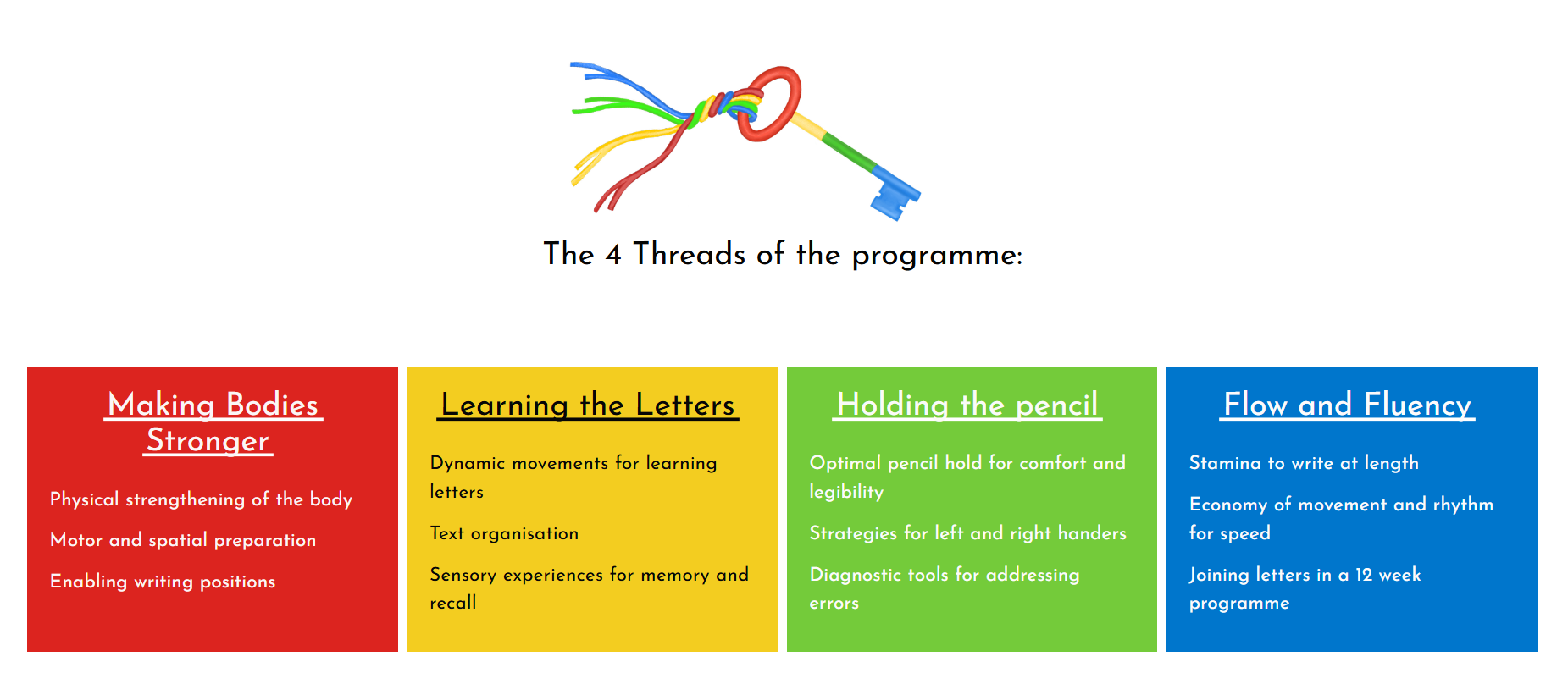
Early Development: In EYFS, pupils strengthen motor control through mark-making and tool manipulation, supported by rich teacher modelling.
Progression: Pupils move from forming letters correctly to joining fluently and writing at length by Year 6 whilst being encouraged to develop their own style.
Support: KS2 pupils with additional handwriting needs receive targeted interventions and scaffolded practice.
Expectations: handwriting is taught daily. High standards of presentation are modelled and reinforced in all books and on iPads. Pupils are motivated to earn and maintain their Pen Licence.
Inclusion
Handwriting at Blowers Green Primary is designed to promote participation and pride in every learner’s work, regardless of physical or learning need. Fine motor skills are carefully developed through multi-sensory activities; the Kinetic Letters scheme is adapted for pupils needing additional support. Clear presentation standards, scaffolded writing tasks and regular monitoring mean all children can write fluently, confidently and respectfully
Impact
Pupils write fluently and legibly with increasing speed and stamina. Clear expectations promote pride, independence and consistency across subjects. Both RWI and Kinetic Letters allow for pupils to rehearse and secure handwriting skills whilst applying them to age related national curriculum skills.
Pupil Voice: Handwriting lessons help me slow down and think carefully about my work. I like seeing my writing get neater.
How We Assess Handwriting
Handwriting is assessed in line with the National Curriculum for English, which requires pupils to develop legible, fluent and increasingly efficient handwriting as part of their transcription skills. The Writing Framework (2025) further emphasises that fluent, automatic handwriting is essential to reducing cognitive load so that pupils can focus on composition.
Letter Formation and Accuracy
In the Early Years and Key Stage 1, teaching and assessment focus on secure letter formation, correct starting points, appropriate pencil grip and posture, and accurate formation of lowercase letters, capital letters and digits. These skills are foundational to developing fluent transcription.
Consistency and Presentation
As pupils progress through Key Stage 1 and into lower Key Stage 2, assessment includes the consistency of letter size, spacing and orientation, as well as the appropriate and increasingly accurate use of joined handwriting. The National Curriculum specifies clear expectations for the development of joined handwriting from Year 2 onwards.
Fluency, Speed and Progression
By upper Key Stage 2, pupils are expected to write fluently, legibly and with increasing speed, choosing the most efficient letter shapes and joins. This reflects the Writing Framework’s definition of transcriptional fluency, where writing becomes sufficiently automatic to allow pupils to focus on communicating meaning rather than the mechanics of forming letters.
This progression, from accurate formation, to consistent and joined handwriting, to fluent and automatic transcription, supports pupils in developing the wider writing skills required by the end of Key Stage 2.
Application Across the Curriculum
Handwriting is assessed across pupils’ everyday work in all subjects, not solely within handwriting practice books. This reflects national expectations that handwriting contributes to statutory teacher assessment at the end of each key stage and should be evident across the curriculum.